Sourcing toolkit
How to compare natural-fiber suppliers and request a useful quote
By Beyond Cotton · Published · Independent editorial guidance
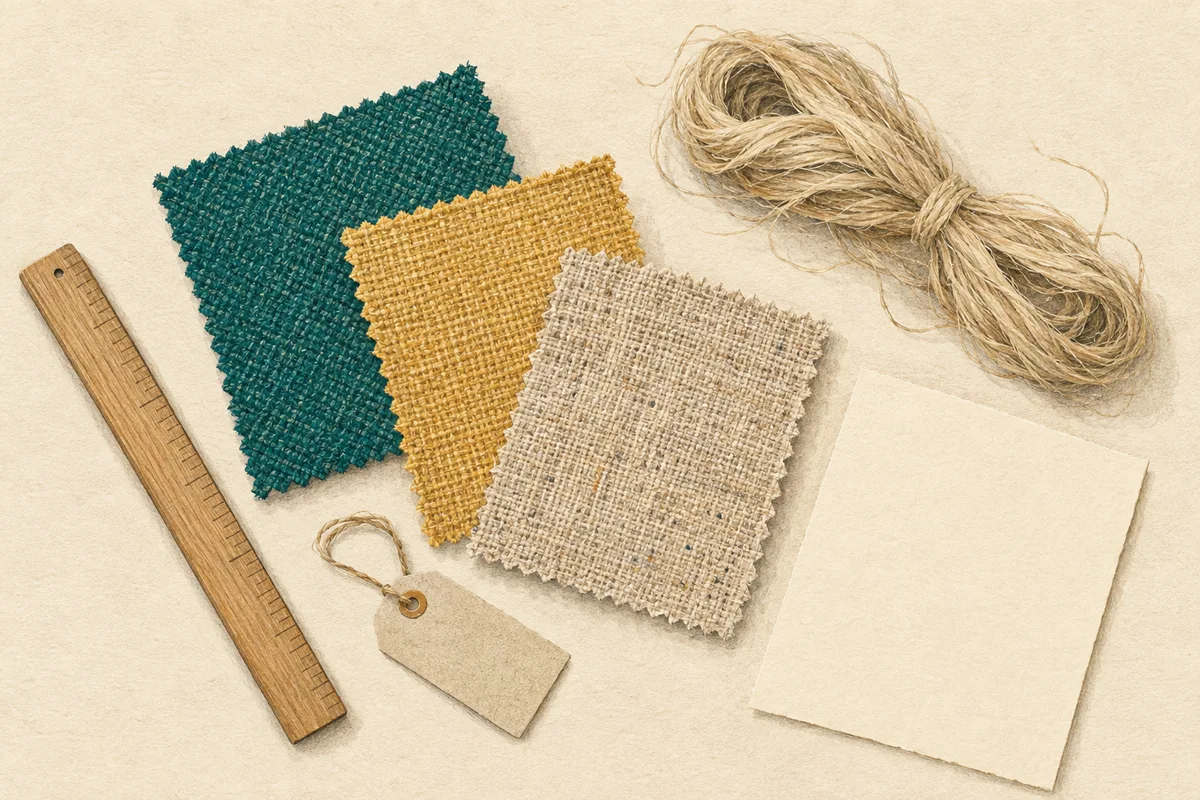
A supplier can offer the right fiber and still be the wrong fit for your project. A mill buying spinning fiber, a designer buying fabric and a brand buying finished garments need different products and commercial terms. Start with the material you can actually use, then ask each supplier to quote against the same brief.
This checklist is for small brands and product developers sourcing beyond cotton. It is a proposed purchasing workflow, not a supplier audit or a claim that we have tested the materials.
1. Choose the product form before the producer
Record what your next production step can handle. A raw-fiber supplier is not automatically a source of ready-to-cut garment fabric. If you need a processor between the two, include that step in your sourcing plan before comparing prices.
- Fiber: ask about grade, preparation, length information and compatibility with your processor’s equipment.
- Yarn: specify composition, count, construction and the intended knitting or weaving process.
- Fabric: specify composition, construction, weight, usable width, color and finish.
- Nonwoven or coated sheet: ask for each layer’s composition, thickness, backing and the intended application.
- Finished clothing: ask about the exact style, size range, garment components and wholesale terms. Retail availability does not establish private-label manufacturing capacity.
Our producer directory identifies the published product offer and evidence status for each record. For finished clothing, use the separate brands and retailers guide.
For example, Bast Fibre Technologies describes its processed fibers as inputs for nonwoven manufacturing. Ananas Anam describes Piñatex as a nonwoven material with coatings that vary by collection. These supplier statements illustrate why the product form and exact specification matter; they are not our laboratory findings.
2. Set the requirements that would rule a sample out
Write down your end use and composition requirements before requesting swatches. If you need cotton-free fabric, say that explicitly and ask whether the statement covers the fabric only or also thread, lining, backing and trims. Keep natural-fiber content separate from claims about an entire coated or blended product.
Agree which performance checks matter with the person making your product. A sample for a washable shirt needs a different evaluation brief from a sheet for a structured bag. Ask for the test method, conditions, date and exact product code behind any result. A supplier’s report is useful evidence; it does not prove how your finished design will perform.
3. Compare quotations on the same basis
Keep a simple comparison sheet with one column per supplier. Use “not confirmed” for missing terms. An unanswered minimum-order question should never become a zero in your budget.
| Field | What to record |
|---|---|
| Exact material | Product code, full composition, grade, weight, width and finish |
| Quantity basis | Kilograms, linear metres, square metres or pieces; minimum per grade and color |
| Price | Currency, quoted quantity, price unit, quote expiry and payment terms |
| Delivery | Named destination, included packing/transport, delivery terms and remaining charges to establish |
| Timing | Sample lead time, production lead time and what starts the clock |
| Evidence | Technical sheet, relevant reports, certificate scope and manufacturing/finishing locations |
| Repeat orders | Batch tolerances, stock continuity and process for nonconforming material |
A worked price comparison
Consider two hypothetical fabric quotes with otherwise matching specifications. Quote A is $18 per linear metre at 1.5 m usable width: $18 ÷ 1.5 = $12 per square metre. Quote B is $15 per linear metre at 1 m usable width: $15 per square metre. The lower price per linear metre is higher per square metre in this example.
This calculation only normalizes area. It does not account for cutting yield, defects, shrinkage, freight or other charges. Confirm usable width rather than assuming the full width can go into your product, and leave unpriced costs visibly unresolved.
4. Request a sample you can trace to the order
Ask for a sample of the exact product code, color and finish being quoted. Confirm whether it represents stock production or a development sample. Label it with the supplier, code, receipt date and quoted specification so your team can connect observations to the right offer.
Record sample cost and freight separately from the production minimum. Evaluate it using the intended cutting, sewing, bonding or finishing process. Note what you tested and what you did not; a good first impression is not a substitute for the checks your application needs.
5. Check the scope of the evidence
For a certification claim, request the identifier, issuer, current validity and covered products or facilities. Use the scheme’s own verification route where available. Ask the supplier to explain how the evidence applies to your exact order rather than treating a logo as proof for every product it sells.
One practical verification route is the OEKO-TEX Label Check. Its STANDARD 100 overview describes testing for harmful substances. That claim should not be stretched into a promise about every performance requirement in your design.
For environmental comparisons, ask what product, boundary and comparison the evidence describes before repeating a number in your marketing. Our editorial policy explains the distinction between a source-reviewed listing and independent verification.
6. Decide on the next step, not just the cheapest offer
Put each supplier into one of three practical groups: ready for sampling, needs clarification, or unsuitable for this brief. Record the reason. A supplier with a higher quoted price may still fit your trial quantity or production process better; a missing specification is a reason to ask another question.
Start your shortlist with the hemp sourcing guide, the pineapple supplier guide, or the full directory. Apply the same evidence standard to each material path.
Linked supplier and certification sources reviewed October 2, 2026. The quotation example is illustrative; no supplier quotes, sample tests or outreach were undertaken for this guide.